Understanding Cryptocurrency Insurance: Risks and Coverage Options


Cryptocurrency insurance can help protect digital assets and crypto businesses against defined losses caused by theft, hacking, fraud, and operational incidents. It does not usually protect against falling prices, poor investment decisions, or every loss involving a cryptocurrency wallet or exchange.
The right policy depends on who controls the assets, how they are stored, which cryptocurrencies are supported, and whether the policyholder can demonstrate effective cybersecurity and internal controls. Availability also varies by insurer, jurisdiction, business model, and risk appetite.
What Is Cryptocurrency Insurance?
Cryptocurrency insurance is specialized coverage for certain losses involving digital assets, blockchain systems, crypto wallets, custodians, exchanges, or related business operations. It differs from investment protection because it generally responds to a covered event, such as theft or a cyberattack, rather than a decline in market value.
Traditional insurance policies were designed around physical property, established payment systems, and familiar legal ownership records. Cryptocurrency introduces additional questions: Who controlled the private key? Was the asset held in cold storage or a hot wallet? Did an employee approve the transaction? Could the transaction be reversed or independently verified?
Coverage may be arranged through several forms of insurance, including crime insurance, cyber insurance, specie or digital-asset coverage, errors and omissions insurance, and policies designed for cryptocurrency exchanges or custodians. The policy wording determines the answer in each claim, so marketing language should never replace a review of definitions, exclusions, conditions, and endorsements.
Cryptocurrency insurance is also different from a warranty or a technology guarantee. A warranty may address a product defect, while insurance transfers specified financial risks to an insurer in return for a premium, subject to deductibles, limits, exclusions, and claims requirements.
Why Cryptocurrency Assets Need Specialized Coverage
Digital assets need specialized coverage because a single security failure can enable an irreversible transfer, while traditional property and financial controls may not clearly address private keys, blockchain transactions, or custody risk.
Cybersecurity and hacking are central concerns. Attackers may compromise an exchange account, steal credentials, exploit smart-contract vulnerabilities, infect an employee’s device, or gain access to signing infrastructure. A hot wallet connected to the internet supports convenient transactions but usually creates more exposure than offline cold storage.
Theft and fraud can also originate inside an organization. An employee, contractor, customer, or third-party service provider might misuse access, submit a fraudulent withdrawal, or manipulate approval procedures. Crime insurance may address some of these events, but the policy may distinguish between employee dishonesty, social engineering, computer fraud, and direct theft.
Private-key loss creates a different problem. If no person can prove control of a wallet or restore access through an approved recovery process, the loss may be treated as an operational failure rather than theft. Many policies exclude lost keys, unexplained disappearance, or transactions that cannot be reconciled to reliable records.
Custody vulnerabilities matter whenever one party holds assets for another. Cryptocurrency exchanges, wallet providers, institutional custodians, and fund administrators may face claims involving commingled assets, inaccurate records, insider access, insolvency, or a failure to follow withdrawal instructions. Insurance can reduce some of that exposure, but it cannot eliminate counterparty or governance risk.
Common Cryptocurrency Insurance Coverage Options
Common cryptocurrency insurance options include crime coverage, cyber insurance, digital-asset or specie insurance, and professional liability policies for companies that store or manage crypto assets.
Crime insurance
Crime insurance may respond to theft, employee dishonesty, computer fraud, funds-transfer fraud, or social-engineering incidents. The exact trigger matters. A policy covering employee theft may not cover a customer who tricks an employee into sending cryptocurrency to an attacker.
Cyber insurance
Cyber insurance generally focuses on incidents affecting information systems. Depending on the wording, it may cover investigation costs, legal expenses, notification obligations, business interruption, ransomware response, or liability to third parties. Direct loss of cryptocurrency may require a specific digital-asset endorsement rather than relying on standard cyber coverage.
Specie and digital-asset coverage
Specie insurance traditionally protects valuable assets while stored, transported, or held in controlled locations. Some specialized policies adapt that concept to digital assets, including cryptocurrency held in approved wallets or custody arrangements. These policies may impose strict requirements for multi-signature controls, offline storage, dual authorization, and transaction monitoring.
Exchange, custodian, and professional liability coverage
Cryptocurrency exchanges and custodians may purchase a combination of crime, cyber, directors and officers, errors and omissions, and custody coverage. Wallet providers and blockchain businesses may also need technology errors and omissions insurance for service failures. No single policy automatically covers every activity performed by a crypto business.
Choosing broader coverage usually means accepting higher premiums, larger deductibles, more audits, and tighter security conditions. A lower-cost policy may leave important risks outside the insured limit.
What Cryptocurrency Insurance May Cover—and Exclude
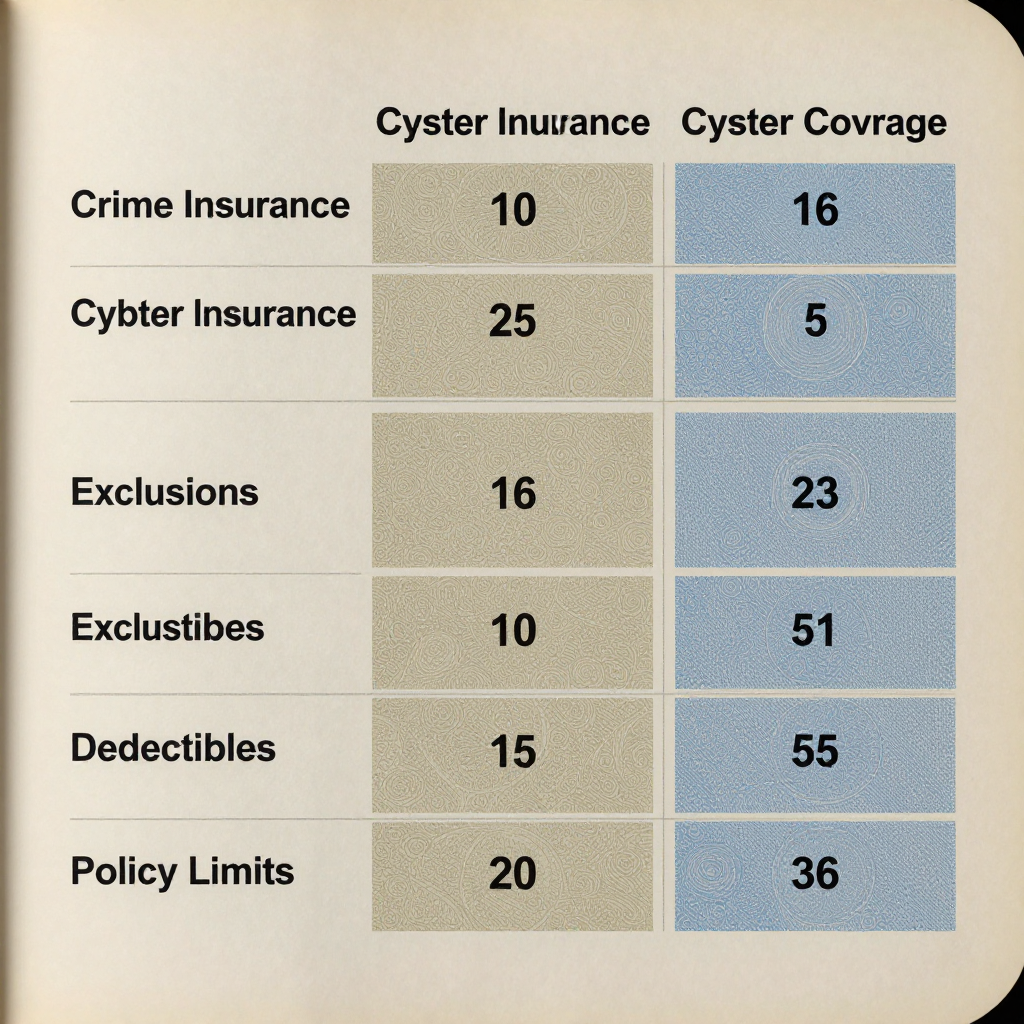
Cryptocurrency insurance may cover a defined theft, hacking incident, fraudulent transfer, or custody failure, but only when the event falls within the policy wording and the policyholder satisfies its security and reporting conditions.
Potentially covered events can include:
- Unauthorized access to an insured hot wallet or exchange system.
- Theft of digital assets following a covered cyber incident.
- Employee dishonesty or internal fraud, where specifically included.
- Fraudulent instructions, subject to social-engineering terms and sublimits.
- Some losses caused by a custodian’s failure to safeguard or account for assets.
- Incident-response, forensic, legal, or notification costs under a cyber policy.
Common exclusions and limitations include:
- Market losses: falling cryptocurrency prices, volatility, liquidation, or missed gains are usually investment risks.
- Negligent authorization: a transfer approved without required checks may be excluded.
- Lost private keys: policies may not cover accidental deletion, forgotten credentials, or an unrecoverable seed phrase.
- Unsupported assets: an insurer may list approved cryptocurrencies and exclude unknown tokens, decentralized finance positions, or assets held through unapproved protocols.
- Inadequate controls: failure to maintain multi-factor authentication, cold storage, segregation of duties, or approved access procedures can jeopardize a claim.
- Policy limits: aggregate limits, wallet sublimits, deductibles, waiting periods, and geographic restrictions can materially reduce recovery.
Valuation is another major issue. A policy may calculate a claim using the asset’s value when the theft was discovered, when the incident occurred, or when the insurer pays. Review this clause carefully, especially for highly volatile digital assets.
Who Needs Cryptocurrency Insurance?
Anyone with material custody, operational, or third-party exposure may need cryptocurrency insurance, but the appropriate coverage differs sharply between an individual investor and a professional custodian.
- Individual investors: should first check whether a home, renters, personal cyber, or specialty policy excludes digital assets. Personal coverage is often limited or unavailable, and exchange accounts are not automatically insured.
- Institutional holders: need clear custody arrangements, approved wallet structures, valuation procedures, and coverage aligned with the full asset balance rather than only a convenient operating wallet.
- Cryptocurrency exchanges: face hot-wallet theft, customer asset claims, insider fraud, business interruption, and regulatory or litigation exposure. Their insurance program should match both proprietary and customer assets.
- Wallet providers and custodians: need protection for custody risk, technology failures, employee access, professional errors, and losses involving assets held for clients.
- Miners and infrastructure businesses: may require cyber, property, equipment breakdown, business interruption, and crime insurance. Cryptocurrency coverage alone does not protect mining hardware or electricity-related losses.
- Other crypto businesses: decentralized application operators, payment companies, brokers, and software providers should assess technology errors and omissions, cyber liability, crime, and directors and officers exposure.
A useful test is to map every asset and responsibility: who owns the cryptocurrency, who controls the private key, who can authorize a transfer, and who bears the loss if the system fails? The answers identify the coverage gap more reliably than a generic policy label.
How to Evaluate a Cryptocurrency Insurance Policy
To evaluate a cryptocurrency insurance policy, compare its covered assets, triggering events, security conditions, valuation method, limits, exclusions, and claims process before comparing premiums.
- List covered assets and storage locations. Confirm whether the policy covers Bitcoin, Ether, stablecoins, other tokens, NFTs, custodial accounts, cold storage, hot wallets, and third-party platforms.
- Define the insured event. Ask whether the wording covers hacking, theft, internal fraud, social engineering, blockchain errors, custodian failure, and accidental transfer. Do not assume one category includes another.
- Check valuation and limits. Review per-wallet, per-event, and annual aggregate limits, along with deductibles and sublimits. Compare the insured amount with the maximum balance actually held.
- Test the exclusions. Pay close attention to negligence, lost private keys, unsupported assets, sanctions, war or systemic cyber events, smart-contract failures, and inadequate security controls.
- Review security requirements. The insurer may require multi-signature wallets, hardware security modules, cold storage, dual approval, privileged-access management, background checks, and independent security testing.
- Confirm geography and counterparties. Check where assets may be stored, which custodians are approved, and whether claims involving overseas operations or service providers are covered.
- Understand the claims process. Determine notification deadlines, forensic requirements, proof-of-loss standards, blockchain tracing expectations, and who has authority to investigate the incident.
- Assess insurer expertise. Ask whether the insurer and broker understand blockchain transactions, custody models, wallet architecture, and the regulatory environment in the relevant jurisdiction.
Before purchasing, obtain the full policy wording and endorsements. A broker’s summary can help compare products, but only the contract establishes the legal scope of coverage.
Practical Steps to Reduce Crypto-Related Risk
To reduce crypto-related risk, combine insurance with strong controls such as multi-factor authentication, cold storage, restricted access, transaction monitoring, and documented recovery procedures.
- Use phishing-resistant multi-factor authentication for exchange, cloud, email, and administrative accounts.
- Keep long-term holdings in cold storage and limit hot-wallet balances to expected transaction needs.
- Separate duties so one person cannot create, approve, and release a high-value transfer.
- Use allowlisted addresses, withdrawal delays, transaction limits, and independent callback verification.
- Record wallet ownership, signing authority, asset balances, and custody agreements in a controlled inventory.
- Maintain encrypted backups and test private-key recovery without exposing seed phrases.
- Monitor blockchain transactions and investigate unusual destinations, timing, amounts, or access locations.
- Review vendors, custodians, smart-contract dependencies, and cybersecurity controls at least annually.
- Prepare an incident plan covering wallet isolation, insurer notification, law-enforcement reporting, forensic preservation, and customer communication.
These controls can improve security and may support underwriting, but they do not guarantee claim payment. A business should document that controls operate in practice, not merely that they appear in a policy manual.
Cryptocurrency Insurance FAQ
Does cryptocurrency insurance cover market price losses?
Usually, no. Cryptocurrency insurance generally addresses specified theft, cyber, fraud, or custody events. Price volatility, liquidation, and investment losses are commonly excluded.
Are crypto exchange accounts automatically insured?
No. An exchange account is not automatically insured merely because it uses a recognized platform. Review the exchange’s disclosures and determine whether any insurance applies to customer assets, which assets are covered, and what limits or exclusions apply.
Can lost private keys be covered?
Often, lost private keys are excluded because there may be no identifiable insured event. Some specialized arrangements may address key-management failures, but the wording and required recovery controls must be reviewed carefully.
What factors affect cryptocurrency insurance premiums?
Premiums reflect asset values, wallet balances, hot- and cold-storage ratios, custody arrangements, transaction volume, geographic exposure, claims history, security controls, employee access, supported assets, limits, and deductibles.
How should a business document a crypto-related claim?
Preserve wallet addresses, transaction hashes, access logs, authentication records, approval histories, system images, custody agreements, balance reports, incident timelines, and communications. Notify the insurer within the contractual deadline and avoid altering evidence before forensic instructions are provided.
Cryptocurrency insurance works best as one layer in a broader risk program. Strong custody design, disciplined cybersecurity, clear accountability, and carefully matched policy terms remain essential because no insurance contract can restore an asset that was never properly controlled or documented.